'%20/%3e%3cg%20opacity='1'%20transform='translate(150.5%200)%20rotate(0)'%3e%3cpath%20id='路径%204'%20fill-rule='evenodd'%20style='fill:%23C70000'%20opacity='1'%20d='M494%20472.601L487%20410.101L460%20472.601L494%20472.601Z'%3e%3c/path%3e%3cpath%20id='路径%203'%20fill-rule='evenodd'%20style='fill:%23003686'%20opacity='1'%20d='M80%20620.761C152%20676.261%20250%20670.761%20264.5%20670.761C351%20664.261%20412.5%20636.261%20443.5%20620.761C536%20572.261%20580.45%20516.261%20599.5%20492.261C566.05%20492.261%20483.5%20492.261%20465.5%20492.261C408%20532.761%20385.5%20541.761%20369%20550.261C262.5%20599.761%20214%20591.261%20184%20591.261C81%20584.761%2024.3%20510.211%200%20478.261C23%20580.261%2067.5%20609.261%2080%20620.761Z'%3e%3c/path%3e%3cpath%20id='路径%202'%20fill-rule='evenodd'%20style='fill:%23003686'%20opacity='1'%20d='M427.998%202.26C325.498%2014.26%20222.068%2073.64%20247.998%2063.76C384.498%2011.76%20427.998%2024.76%20437.998%2024.76C526.998%2041.76%20559.998%2085.76%20568.998%2095.76C606.498%20142.26%20611.398%20187.06%20613.498%20206.26C631.458%20206.26%20679.498%20206.26%20703.998%20206.26C692.998%20109.26%20633.378%2063.91%20622.998%2056.26C563.998%2012.76%20513.248%205.41%20491.498%202.26C467.498%20-2.24%20437.168%201.19%20427.998%202.26Z'%3e%3c/path%3e%3cpath%20id='路径%201'%20fill-rule='evenodd'%20style='fill:%23C70000'%20opacity='1'%20d='M232%20206.763C243%20178.763%20262%20156.763%20273.5%20140.263C329%2080.2634%20374%2069.7634%20410.5%2061.2634C446.5%2052.2634%20499%2061.2634%20504.5%2061.2634C446%2039.7634%20393%2040.7634%20387.5%2040.7634C308.5%2047.2634%20259.5%2075.2634%20237%2088.7634C162.5%20135.263%20122.95%20185.313%20106%20206.763C139.86%20206.763%20221.5%20206.763%20232%20206.763Z'%3e%3c/path%3e%3c/g%3e%3cpath%20id='减去顶层'%20fill-rule='evenodd'%20style='fill:%23003686'%20opacity='1'%20d='M379.519,227.698l4.237,4.101l-38.576,198.188h98.804l3.966,3.839l-7.614,38.817h-147.091l-4.064,-3.934l46.975,-241.011zM900.883,363.706c-21,-8.75%20-34.89067,-17.22667%20-41.672,-25.43c-6.78133,-8.20333%20-10.172,-19.19533%20-10.172,-32.976c0,-24.06267%208.832,-43.75033%2026.496,-59.063c17.664,-15.312%2040.55067,-22.968%2068.66,-22.968c11.266,0%2022.231,1.121%2032.895,3.363c10.664,2.242%2020.974,5.60533%2030.93,10.09l-8.139,40.672l-5.05,2.827c-6.54467,-5.18467%20-13.96233,-9.21167%20-22.253,-12.081c-9.95333,-3.44533%20-21.00033,-5.168%20-33.141,-5.168c-12.906,0%20-23.406,3.08967%20-31.5,9.269c-8.09333,6.18%20-12.14,14.08233%20-12.14,23.707c0,9.18733%2010.06233,18.32%2030.187,27.398l1.149,0.493l19.031,8.367c15.96867,7.10933%2027.64433,15.668%2035.027,25.676c7.38267,10.00733%2011.074,22.28467%2011.074,36.832c0,25.156%20-8.80467,45.226%20-26.414,60.21c-17.60933,14.98467%20-41.39833,22.477%20-71.367,22.477c-12.03133,0%20-24.30867,-1.422%20-36.832,-4.266c-12.52333,-2.84333%20-25.56633,-7.16367%20-39.129,-12.961l8.62,-44.559l4.63,-2.592c9.52333,7.45333%2019.435,13.24467%2029.735,17.374c11.59333,4.64867%2023.24167,6.973%2034.945,6.973c14.54667,0%2025.97633,-3.19933%2034.289,-9.598c8.31267,-6.39867%2012.469,-15.06667%2012.469,-26.004c0,-6.78133%20-1.914,-12.66%20-5.742,-17.636c-3.82867,-4.97667%20-9.51633,-9.051%20-17.063,-12.223zM54.3672,227.698h68.9058c25.81267,0%2045.473,5.004%2058.981,15.012c13.50733,10.008%2020.261,24.58233%2020.261,43.723c0,12.46867%20-1.996,24.82767%20-5.988,37.077c-3.992,12.25%20-9.16,21.98467%20-15.504,29.204c-8.53133,9.95267%20-19.14067,17.14433%20-31.828,21.575c-12.68733,4.42867%20-29.14817,6.643%20-49.3825,6.643h-26.9063l-17.8828,91.711h-43.7778l-3.88732,-3.761zM642.062,227.698h59.063l18.238,240.969l-4.109,3.976h-43.66l-2.297,-60.539h-0.041l-1.756,-40.844l-0.04,-0.002l-3.249,-98.607l-41.151,94.615l-0.06,-0.006l-20.5,47.5h0.005l-25.411,57.883h-43.849l-3.589,-3.474zM94.7266,268.386l-13.7813,71.859h23.4607c15.96867,0%2027.918,-3.69133%2035.848,-11.074c7.92933,-7.38267%2011.894,-18.457%2011.894,-33.223c0,-9.95333%20-2.84367,-17.03533%20-8.531,-21.246c-5.68733,-4.21067%20-15.367,-6.316%20-29.039,-6.316z'%3e%3c/path%3e%3c/svg%3e)

December 19, 2025 - McDonald's China announced a green upgrade for its meal packaging—over 7,500 restaurants nationwide will gradually adopt new bio-based packaging. After the upgrade, McDonald's primary packaging materials will be polylactic acid (PLA) and paper, which is expected to reduce the use of petroleum-based plastics by over 5,800 tons annually. McDonald's China is committed to green innovation, choosing and using packaging materials more responsibly while ensuring customer dining experience.

McDonald's China Adopts New Bio-based Packaging, Expected to Reduce Petroleum-based Plastic Use by Over 5,800 Tons Annually
Starting now, McDonald's restaurants across China are beginning to gradually introduce new bio-based packaging—the packaging lids for McCafé items, beverages, sundaes, corn, and porridge will use PLA material. Simultaneously, parts of the packaging (the cup bodies for beverages, sundaes, corn, etc.) will also switch from petroleum-based plastic to paper-based materials. The newly upgraded packaging showcases four key characteristics: "Innovation, Environmental Protection, Experience, Safety."
Innovation: During the R&D process for the new packaging, approximately 100 packaging solutions were screened and validated through over 2 million practical tests, achieving innovative large-scale application of bio-based packaging. This stems from the collaborative efforts and local independent R&D between McDonald's China and its supply chain partners.
Environmental Protection: The upgraded packaging uses innovative bio-based materials—polylactic acid (PLA) and paper—as core materials. It is expected to reduce petroleum-based plastic use by over 5,800 tons annually, driving the transition of packaging materials towards renewable resources.
Experience: McDonald's China insists on using greener packaging while ensuring customer dining experience. The new cold drink lid creatively uses a "double-arch anti-spill" structure, which has been granted an exterior design patent (CN309649874S). By raising the vent hole and retaining the sip-through opening, the leak-proof performance of the new cold drink lid has been effectively improved. The new hot drink lid, through a self-developed formula, enhances the toughness and heat resistance of the PLA material, further optimizing the consumer experience.
Safety: Hygiene, safety, and reliability are consistent requirements for McDonald's customer-facing packaging. McDonald's China has established a strict quality inspection system at the supply chain access stage. All upgraded packaging materials have passed third-party authoritative testing, with all indicators complying with national food safety standards, solidifying the food safety defense from the source.
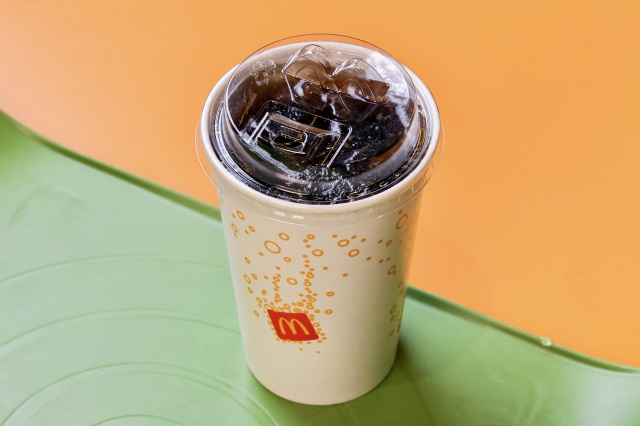
McDonald's New Cold Drink Lid Innovatively Uses "Double-Arch Anti-Spill" Structure, Effectively Improving Leak-Proof Performance
"McDonald's China's achievement in the large-scale application of bio-based packaging further promotes the transition of customer-facing packaging materials towards renewable resources. This innovation fills a gap in McDonald's global efforts in this field. We hope that through our own practices and in collaboration with industry partners, we can progress together, making every delicious meal carry a touch of goodness," said Gu Lei, Chief Impact Officer of McDonald's China.
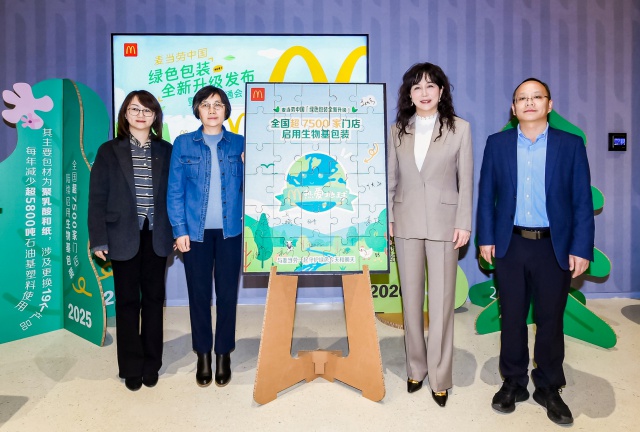
Starting Now, McDonald's Restaurants Nationwide Begin Gradually Introducing New Bio-based Packaging
Weng Yunxuan, Executive Dean of the School of Light Industry Science and Engineering at Beijing Technology and Business University and Secretary-General of the Degradable Plastics Committee of the China Plastics Processing Industry Association, commented: "Bio-based packaging materials use biomass as raw materials and are manufactured through biotechnology, featuring good biocompatibility and biodegradability. PLA bio-based materials have gained global attention, are strategic new materials for China, and align with the national dual-carbon strategy and the goal of building a beautiful China. McDonald's China's large-scale application of PLA bio-based materials represents a forward-looking exploration in green packaging, holding significant importance for the development of the bio-based materials industry and the sustainable development of the catering industry."
McDonald's China continues to promote its "Green Packaging" initiative, optimizing packaging materials, reducing plastic use, and collaborating with local supply chains for innovation, gradually expanding the categories and application scenarios of green packaging to create a rich green packaging experience for consumers.
Taking the Lead in Plastic Reduction: In 2007, McDonald's China pioneered the use of paper bags for takeout packaging in the domestic catering industry. In 2010, the McFlurry switched to paper cup packaging. In 2020, straw-free lids were implemented in all restaurants in mainland China, reducing plastic use by approximately 400 tons annually.
Continuous Material Upgrades: In 2020, McDonald's China became the first brand in the industry to achieve 100% use of Forest Stewardship Council (FSC) certified virgin paper for paper-based food packaging, supporting sustainable forest management. This time, McDonald's China, together with industry partners, promoted the independent R&D of modified PLA material formulas, enhancing the toughness and heat resistance of PLA material for hot drink lid applications, further driving the transition of packaging materials from petroleum-based to renewable resources.
Wang Wenhua, Sustainability Expert of the China Chain Store & Franchise Association, stated: "As a pioneer in promoting green packaging within the chain catering industry, this fully demonstrates the brand's responsibility and commitment to practicing green and sustainable development. McDonald's active exploration of the large-scale application of new bio-based materials, while balancing environmental protection and consumer experience, and collaborating with local enterprises to innovate green packaging solutions, provides valuable practical examples for chain operation enterprises."