'%20/%3e%3cg%20opacity='1'%20transform='translate(150.5%200)%20rotate(0)'%3e%3cpath%20id='路径%204'%20fill-rule='evenodd'%20style='fill:%23C70000'%20opacity='1'%20d='M494%20472.601L487%20410.101L460%20472.601L494%20472.601Z'%3e%3c/path%3e%3cpath%20id='路径%203'%20fill-rule='evenodd'%20style='fill:%23003686'%20opacity='1'%20d='M80%20620.761C152%20676.261%20250%20670.761%20264.5%20670.761C351%20664.261%20412.5%20636.261%20443.5%20620.761C536%20572.261%20580.45%20516.261%20599.5%20492.261C566.05%20492.261%20483.5%20492.261%20465.5%20492.261C408%20532.761%20385.5%20541.761%20369%20550.261C262.5%20599.761%20214%20591.261%20184%20591.261C81%20584.761%2024.3%20510.211%200%20478.261C23%20580.261%2067.5%20609.261%2080%20620.761Z'%3e%3c/path%3e%3cpath%20id='路径%202'%20fill-rule='evenodd'%20style='fill:%23003686'%20opacity='1'%20d='M427.998%202.26C325.498%2014.26%20222.068%2073.64%20247.998%2063.76C384.498%2011.76%20427.998%2024.76%20437.998%2024.76C526.998%2041.76%20559.998%2085.76%20568.998%2095.76C606.498%20142.26%20611.398%20187.06%20613.498%20206.26C631.458%20206.26%20679.498%20206.26%20703.998%20206.26C692.998%20109.26%20633.378%2063.91%20622.998%2056.26C563.998%2012.76%20513.248%205.41%20491.498%202.26C467.498%20-2.24%20437.168%201.19%20427.998%202.26Z'%3e%3c/path%3e%3cpath%20id='路径%201'%20fill-rule='evenodd'%20style='fill:%23C70000'%20opacity='1'%20d='M232%20206.763C243%20178.763%20262%20156.763%20273.5%20140.263C329%2080.2634%20374%2069.7634%20410.5%2061.2634C446.5%2052.2634%20499%2061.2634%20504.5%2061.2634C446%2039.7634%20393%2040.7634%20387.5%2040.7634C308.5%2047.2634%20259.5%2075.2634%20237%2088.7634C162.5%20135.263%20122.95%20185.313%20106%20206.763C139.86%20206.763%20221.5%20206.763%20232%20206.763Z'%3e%3c/path%3e%3c/g%3e%3cpath%20id='减去顶层'%20fill-rule='evenodd'%20style='fill:%23003686'%20opacity='1'%20d='M379.519,227.698l4.237,4.101l-38.576,198.188h98.804l3.966,3.839l-7.614,38.817h-147.091l-4.064,-3.934l46.975,-241.011zM900.883,363.706c-21,-8.75%20-34.89067,-17.22667%20-41.672,-25.43c-6.78133,-8.20333%20-10.172,-19.19533%20-10.172,-32.976c0,-24.06267%208.832,-43.75033%2026.496,-59.063c17.664,-15.312%2040.55067,-22.968%2068.66,-22.968c11.266,0%2022.231,1.121%2032.895,3.363c10.664,2.242%2020.974,5.60533%2030.93,10.09l-8.139,40.672l-5.05,2.827c-6.54467,-5.18467%20-13.96233,-9.21167%20-22.253,-12.081c-9.95333,-3.44533%20-21.00033,-5.168%20-33.141,-5.168c-12.906,0%20-23.406,3.08967%20-31.5,9.269c-8.09333,6.18%20-12.14,14.08233%20-12.14,23.707c0,9.18733%2010.06233,18.32%2030.187,27.398l1.149,0.493l19.031,8.367c15.96867,7.10933%2027.64433,15.668%2035.027,25.676c7.38267,10.00733%2011.074,22.28467%2011.074,36.832c0,25.156%20-8.80467,45.226%20-26.414,60.21c-17.60933,14.98467%20-41.39833,22.477%20-71.367,22.477c-12.03133,0%20-24.30867,-1.422%20-36.832,-4.266c-12.52333,-2.84333%20-25.56633,-7.16367%20-39.129,-12.961l8.62,-44.559l4.63,-2.592c9.52333,7.45333%2019.435,13.24467%2029.735,17.374c11.59333,4.64867%2023.24167,6.973%2034.945,6.973c14.54667,0%2025.97633,-3.19933%2034.289,-9.598c8.31267,-6.39867%2012.469,-15.06667%2012.469,-26.004c0,-6.78133%20-1.914,-12.66%20-5.742,-17.636c-3.82867,-4.97667%20-9.51633,-9.051%20-17.063,-12.223zM54.3672,227.698h68.9058c25.81267,0%2045.473,5.004%2058.981,15.012c13.50733,10.008%2020.261,24.58233%2020.261,43.723c0,12.46867%20-1.996,24.82767%20-5.988,37.077c-3.992,12.25%20-9.16,21.98467%20-15.504,29.204c-8.53133,9.95267%20-19.14067,17.14433%20-31.828,21.575c-12.68733,4.42867%20-29.14817,6.643%20-49.3825,6.643h-26.9063l-17.8828,91.711h-43.7778l-3.88732,-3.761zM642.062,227.698h59.063l18.238,240.969l-4.109,3.976h-43.66l-2.297,-60.539h-0.041l-1.756,-40.844l-0.04,-0.002l-3.249,-98.607l-41.151,94.615l-0.06,-0.006l-20.5,47.5h0.005l-25.411,57.883h-43.849l-3.589,-3.474zM94.7266,268.386l-13.7813,71.859h23.4607c15.96867,0%2027.918,-3.69133%2035.848,-11.074c7.92933,-7.38267%2011.894,-18.457%2011.894,-33.223c0,-9.95333%20-2.84367,-17.03533%20-8.531,-21.246c-5.68733,-4.21067%20-15.367,-6.316%20-29.039,-6.316z'%3e%3c/path%3e%3c/svg%3e)

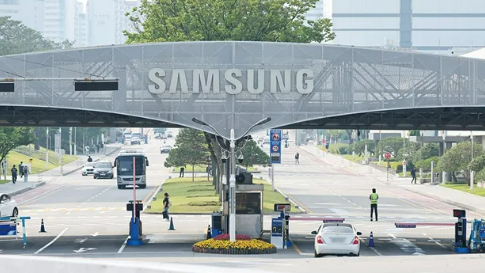
In Seoul, March 2026, a long-simmering protest is quietly approaching outside the residence of Samsung Electronics Chairman Lee Jae-yong. Meanwhile, at the Pyeongtaek semiconductor complex a hundred kilometers away—Samsung's core AI chip production base, responsible for mass production of HBM4 and key collaborations with AMD and Nvidia—engineers on the shop floor have their own concerns.
Just days ago, 66,000 members of Samsung Electronics' labor union completed a strike vote, with a 93.1% approval rate setting a new record for labor-management confrontation since the company's founding. A total strike lasting 18 days, set to begin May 21, now threatens to idle half of the production capacity at this global semiconductor hub.
This protest is not merely an internal labor dispute at Samsung; it is a pebble cast into the global AI chip market during a period of unprecedented demand, with potential ripple effects across the entire semiconductor supply chain.
I. Why Is Samsung Facing Internal Strife Amid the AI Chip Boom?
The global semiconductor industry is currently in a super upcycle driven by AI chips. Surging demand from data center construction, artificial intelligence, and new energy vehicles has led to shortages and continued price increases for high-end memory chips such as DRAM and HBM. Samsung Electronics, the world's largest memory chip manufacturer, holds approximately 40% of the global DRAM market and is also the second-largest foundry globally. Its Pyeongtaek facility, the core mass production base for HBM4 chips, carries AI chip orders from giants like Nvidia and AMD, making it a critical link in the global AI industry chain.
This largest-ever strike did not erupt spontaneously but rather reflects a concentrated release of long-standing imbalances in labor-management interests. The core triggers were the uneven distribution of industry dividends and the direct pressure of pay gaps with competitors.
Samsung Electronics experienced a record-breaking performance in 2025, with fourth-quarter operating profit reaching 20.1 trillion won. Riding the surge in AI chip demand, its semiconductor division contributed 80% of the group's profit, and investment banks forecast its 2026 operating profit to exceed 200 trillion won.
However, frontline employees have not fully benefited from this industry feast. Meanwhile, competitor SK Hynix has already abolished bonus caps and set aside 10% of operating profit for employee bonuses, meaning employees at the same level receive three times the bonus of their counterparts at Samsung. This has led to over a hundred Samsung employees leaving for SK Hynix in just the past three months. When the union's reasonable demands for compensation reform were repeatedly rebuffed at the negotiating table, labor-management conflict reached a boiling point, leaving strike action as the final recourse for employees seeking fair treatment.
Samsung's labor negotiations began in November 2025. After multiple rounds of talks over three months, the union's three core demands remained unmet. Management only proposed a compromise including a 6.2% wage increase, and the gap between the two sides proved unbridgeable. Negotiations broke down in February 2026, and in March, the mediation by the National Labor Relations Commission was suspended, clearing the legal path for a strike.

The OPI bonus is Samsung's current bonus calculation method, based on Economic Value Added (EVA) and tied to business performance. However, it suffers from issues of opaque calculation and the setting of caps, making it a central point of contention in these labor negotiations.
With both sides deadlocked, this dispute has long ceased to be a private matter between them, now affecting the nerves of the entire industrial chain.
II. Multiple Forces at Play: Who Will Bear the Cost of This Strike?
From frontline employees to management, and from upstream suppliers to downstream customers, all parties have distinctly different positions, making the dynamics increasingly complex.
This Samsung Electronics strike involves four core groups: the union, Samsung management, the semiconductor industry chain's upstream and downstream, and the global market. Their respective stances, demands, and impacts differ:
The Union: Comprised of three Samsung Electronics labor unions covering 90,000 members. Core demands: a 7% base salary increase, abolition of the performance bonus cap, and introduction of a profit-sharing system tied to operating profit. The goal is fair compensation and protection of employee rights. Methods include strikes, rallies, and protests to exert pressure.
Samsung Management: Focused on balancing corporate costs, long-term investment, and shareholder returns. They worry that abolishing the bonus cap would weaken the company's financial capacity and widen income disparities between different business divisions. They have offered limited wage increases and stock incentive plans, seeking to maintain the core framework of the existing compensation system.
Semiconductor Industry Chain (Upstream & Downstream): Upstream includes chip equipment and raw material suppliers; downstream includes chip designers like Nvidia and AMD, as well as end-product manufacturers like smartphone, automotive, and server companies. Their primary concern is that production halts at Samsung will cause chip shortages, delivery delays, and increased procurement costs, impacting their own production schedules.
Global Market: Includes investors, industry analysts, and semiconductor industry authorities in various countries. Investors worry the strike will hurt Samsung's performance and cause stock volatility; the broader market fears the strike will exacerbate global chip supply shortages, drive up prices for DRAM and HBM, and impact the development of the global AI industry and electronics manufacturing.
Looking beyond the surface of this multi-party game, the essence of this strike is far more profound than a simple demand for higher pay.
III. Peeling Back the Surface: The Core Issue in the Labor-Management Conflict
At its heart, the Samsung Electronics strike is a conflict over the distribution of profits between labor and management during a period of exceptional corporate performance. Intertwined with this is the industry competition and talent war occurring during the semiconductor supercycle. It is not merely a matter of employees demanding higher wages; it reflects the challenge of balancing corporate growth with employee welfare, and reveals the latent risks to global core industry supply chains during periods of rapid expansion.
What is even more concerning is that the destructive potential of this internal conflict extends far beyond Samsung itself, posing a direct threat to global supply chain security.
Samsung controls 40% of the global DRAM market, and the Pyeongtaek facility is the core production base for HBM4. If a strike occurs, up to half of Pyeongtaek's capacity could be idled. Direct losses to Samsung could reach 5 to 9 trillion won (approximately 23 to 41.4 billion RMB). This would further exacerbate the global shortage of memory chips and delay HBM4 deliveries, directly impacting AI data center construction and new energy vehicle production.
The core disagreement between labor and management is over the "rules of distribution." The union demands the removal of bonus caps and a system of profit sharing based on operating profit, seeking fairness and transparency. Management prioritizes the company's long-term development, concerned about how changes to the distribution system would affect capital allocation. The standoff is not simply about the number of percentage points for a raise; it is a contest over who sets the rules for the compensation system.

IV. The Fatal Trap During Industry Boom Cycles
Samsung Electronics' labor conflict is not unique to the semiconductor industry; it is a common issue for manufacturing companies across sectors enjoying industry boom cycles. Similar labor-management struggles have played out repeatedly in industries such as automotive, new energy, and chemicals:
During the explosive growth of the new energy vehicle industry, a leading automaker saw sales and profits double, but production employees protested when wage increases did not keep pace with industry growth. The core reason was the failure to properly transmit industry dividends to frontline workers.
In the chemical industry, during periods when raw material and product prices were rising, some companies faced talent poaching by competitors due to unequal internal profit distribution, affecting core production capabilities.
The common pattern in these cases is clear: when an industry enters an upcycle and corporate performance soars, if internal benefit distribution fails to adjust accordingly and employees do not share in the growth, labor conflicts are likely to arise. Moreover, for industry leaders occupying critical positions, such internal conflicts do not just affect the company itself; through fluctuations in production and supply, they can trigger ripple effects throughout the entire industrial chain. This aligns precisely with the logic that a strike at Samsung, a global semiconductor leader, would impact the global chip supply chain.
Conclusion
The strike crisis at Samsung Electronics appears on the surface to be an internal labor-management dispute, but in reality, it represents a profound test for a global core industry navigating a period of high growth.
For Samsung Electronics, properly resolving this labor conflict is not merely about "increasing pay and giving up profits"; it is an investment in the company's long-term future. Fair distribution of benefits can retain core talent, and stable production ensures a smooth supply chain—these are far more valuable than short-term cost control.
For the global semiconductor industry as a whole, this strike serves as a warning. In an era of deeply integrated and interdependent supply chains, internal conflicts at any single core industry leader can trigger cascading effects across the global supply chain. Industry development requires not only technological breakthroughs and capacity expansion but also internal harmony and balanced interests.
From a broader perspective, balancing labor-management relations has always been an eternal challenge for corporate development. During upcycles across various industries, only by ensuring that the dividends of corporate growth are reasonably shared with all participants, allowing employees to grow in sync with the company, can businesses achieve sustainable, long-term success and the industrial chain achieve healthy, stable development.
The ultimate answer to this contest at Samsung Electronics should not be "labor versus management," but rather "mutual benefit through shared interests." This is not only the way forward for Samsung to resolve its current crisis, but also the wisdom for development for all leading industry players. The global semiconductor industry, in the wake of this event, will likely come to a deeper understanding: supply chain security depends not only on capacity deployment but also on the stability and harmony of every link in the chain.